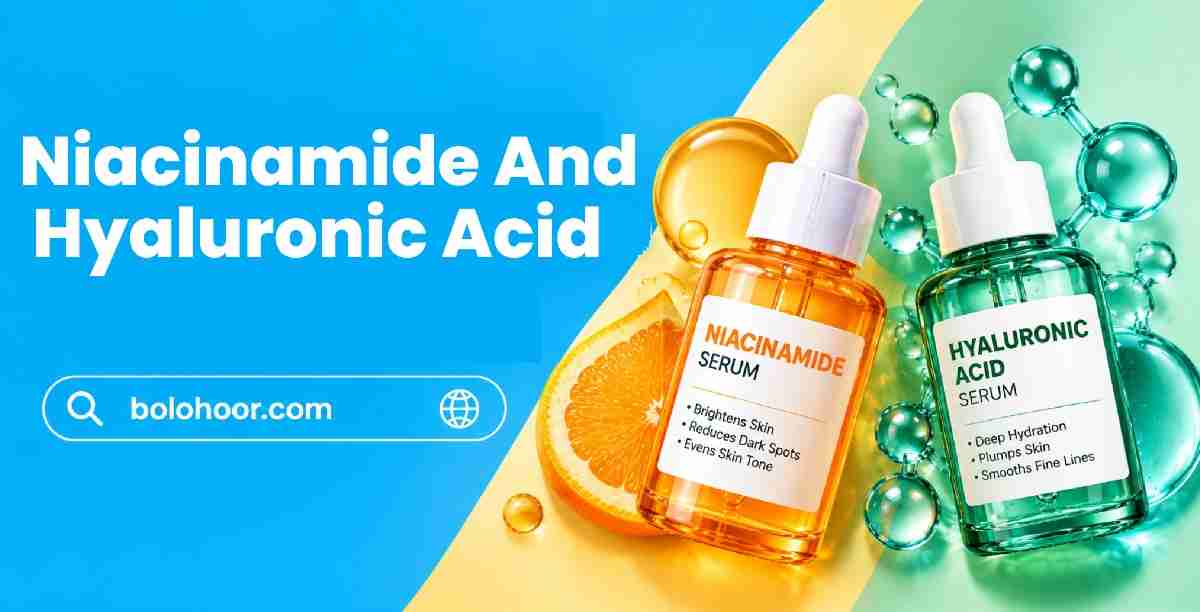
When we go to buy serums for skincare, we come across many such products which we do not understand. What does our skin need? Niacinamide and Hyaluronic Acid are also two such famous ones.
I myself have used both Niacinamide and Hyaluronic Acid but the experience of both was not the same for me. With time I have understood that it is not enough to just see how famous a product is but it is also important to see what our skin needs.
If you are also wondering whether you should use Niacinamide or Hyaluronic Acid, then first understand the difference between the two.
What is Niacinamide?
Niacinamide is a form of Vitamin B3, people use it in skincare routines, and it may help reduce excess oil.
This may be especially interesting for those who feel oil on skin, open pores or uneven skin tone.
The purpose of Niacinamide is not only to make the skin feel soft but also to help improve the condition of the skin.
What is Hyaluronic Acid?
Hyaluronic Acid helps the skin retain moisture. Due to Acid in the name, people think it is harsh for the skin. But its purpose is to maintain moisture in the skin.
That is why it is especially beneficial for skin that suffers from dehydration or feels stretched.
In my own experience too, hyaluronic acid has resulted in moisture and the skin was feeling good, while the use of Niacinamide felt more suitable for the overall condition of the skin.
Niacinamide vs Hyaluronic Acid: Main difference
Both ingredients do not work the same.
Niacinamide:
- Helps support skin’s protective barrier
- Helps balance your oil
- May help improve the appearance of uneven skin tone
- Helps pores to appear less noticeable
- Also effective in taking care of pimple prone skin in some people
Hyaluronic Acid:
- Helps keep skin moist
- Can soothe dry and rough skin
- Helps skin feel soft
- May help make fine lines look less noticeable
- Can make skin feel more plump and fresh
So if you are confused between Niacinamide & Hyaluronic Acid, the answer depends on your skin’s need.
For which skin is Niacinamide better?
Niacinamide can be used for different types of skin, but it can be especially beneficial for those whose skin:
- If your skin is oily
- Feels too shiny
- Visible open pores
- Helps to protect the protective barrier of skin
Those with dry skin can use Niacinamide, but they should also use moisturizer to maintain the skin.
Hyaluronic Acid is better for which skin?
Hyaluronic Acid may be particularly good for people with
- Dry skin
- Feels stretched
- Feel uncomfortable after washing
- Becomes tighter due to weather or environment
- People with normal or oily skin can also use it.
Why use Niacinamide?
Some people include it in their daily routine to balance oil on the skin while some people use it continuously to improve skin tone or open pores. It is important to remember that Niacinamide is not a quick fix, it may take time to see better results, not everyone gets the same results.
Why use Hyaluronic Acid?
The biggest purpose of Hyaluronic Acid is to keep the moisture in the skin. If after washing the face, skin feels pulled and makeup also feels rough, then Hyaluronic Acid serum can be included in the routine.
This may be especially good for those who want their skin to feel softer, smoother and more moisturized.
At what age should Niacinamide be used?
Just looking at age is not enough to decide whether to use niacinamide. Youngsters can also use it, especially if the skin is oily or needs some extra care.
Just because a serum is popular, it is not necessary to use it at a young age.
At what age should Hyaluronic Acid be used?
Hyaluronic Acid can also be used at a young age, especially if the skin is suffering from dehydration.
On the other hand, if you start feeling the lack of moisture, Hyaluronic Acid can help the skin feel softer and more supple.
Can Niacinamide and Hyaluronic Acid be used together?
Yes, Hyaluronic Acid and Niacinamide can be used together.
Niacinamide supports the protective barrier, while the Hyaluronic Acid helps in maintaining moisture in the skin.
If using two serums, it is easy to start with a lighter serum and then apply the next product and moisturizer as per your skin. Sunscreen should not be ignored during the day.
Which is better: Niacinamide or Hyaluronic Acid?
If there is dryness or stretchiness and lack of moisture in the skin, then Hyaluronic Acid is OK. If the reason is oil or uneven color of your skin, then Niacinamide is more suitable. If you feel the need for both, then it is possible to include both in one case.
One important thing before use
Instead of applying serum on the entire face, it is better to start with a small amount. If you feel a burning sensation, then stop using it. This is the danger of using too many ingredients at once. Let the skin get accustomed to new routines.
Want to learn about Rice Skincare? Read our guide on Rice Skincare: Trend or Worth It?
FAQs
What is better for oily skin? Niacinamide or Hyaluronic Acid?
Niacinamide may help people with oily skin and Hyaluronic Acid helps with moisture.
Is Hyaluronic Acid good for dry skin?
It can help dehydrated and dry skin feel soft and moist.
Can Hyaluronic Acid be used for oily skin?
It can be used for oily skin.
Does Niacinamide help with uneven skin tone?
It may help improve the appearance of uneven skin tone with regular use.
Do I need both serums?
Choose according to your skin.
Can Hyaluronic Acid and Niacinamide be used together?
They can be used.
Final suggestion
I have used both Niacinamide and Hyaluronic Acid. For me, I find benefits of both, hence now I don’t use any serum just because it is famous but first I check whether my skin needs anything else at this time. After all, for good skin, a simple consistent routine according to the skin is more important than expensive products and using too many of them.
This article is for general informational purposes only and is not medical advice, diagnosis, or treatment. Bolo Hoor is not a medical institution. If you have a skin, hair, or eye concern, consult a qualified dermatologist or healthcare professional.